

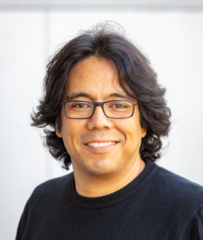
Juan Carlos Idrobo is an Associate Professor in the Materials Science & Engineering Department. His research consists in applying analytical techniques in electron spectroscopy within monochromated and aberration-corrected scanning transmission electron microscopy to study the structure, electronic, magnetic, thermal, optical and topological properties of materials.
Position: IRG 1
Stefan Stoll

Stefan Stoll is a Professor and the Associate Chair of Research in the Department of Chemistry at the University of Washington. The Stoll Research Group's primary focus is advanced Electron Paramagnetic Resonance (EPR) spectroscopy, a set of techniques that allows us to measure molecules with unpaired electrons such as organic radicals and transition metal ions and learn about their structure and nano-environment. As part of MEM-C, the Stoll group works within IRG-1 on characterizing the spin decoherence dynamics of qubit candidates in oxide materials and metal-organic frameworks and on guiding the design of spin qubits with properties suitable for quantum applications.
Dianne Xiao

Dianne Xiao is a Professor of Chemistry. The overarching goal of research in the Xiao group is to endow porous materials with the enhanced reactivity and physical properties needed to meet rising global challenges in clean energy and sustainability. In the context of MEM-C, a particular area of interest is the synthesis of nanoscale metal–organic frameworks for quantum information science applications.
Lilo Pozzo
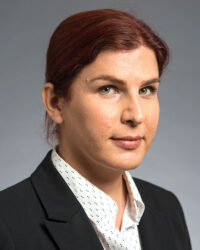
Lilo Pozzo is a Professor of Chemical Engineering at the University of Washington. Research in the Pozzo laboratory focuses on understanding, manipulating and controlling structure and properties of soft materials including polymers, colloids and nanomaterials. The Pozzo laboratory develops and applies advanced scattering techniques (x-ray, light and neutrons) as well as high-throughput experimentation and data-science enabled materials research tools to unravel the fundamental relationships that exist between structure and properties for soft matter systems of relevance to numerous engineering applications.
Xiaosong Li
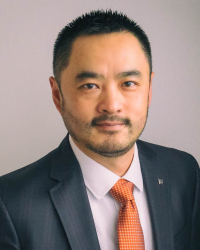
Scott Dunham

Scott Dunham is a Professor in UW's Electrical and Computer Engineering department in the research areas of electronic, photonic, and integrated quantum systems (EPIQS). For MEM-C, Scott's research is focused on the fundamental understanding and modeling of complex materials, nanofabrication processes, and electronic and optoelectronic devices.
Peter Pauzauskie
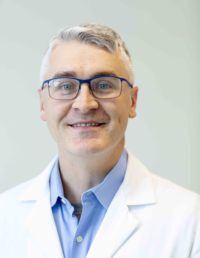
Kai-Mei Fu
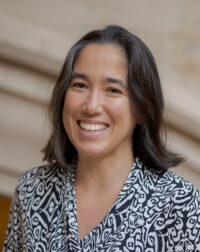
Kai-Mei Fu is Professor of Physics and Electrical Engineering at University of Washington.
Fu's Quantum Defect Lab studies defects in crystals- both in bulk single crystals and nanoparticles. Their MEM-C work spans the areas of materials characterization, spin-photonics and magnetism. The group is occupied with the following questions:
* What are the fundamental properties of a known defect state? Alternatively, by measuring the properties of an unknown state, can we identify it?
* How can the quantum properties of a defect be engineered and controlled?
* What new technologies can quantum properties of defects enable?
* What new capabilities can be realized through solid-state device integration of defects?
James DeYoreo
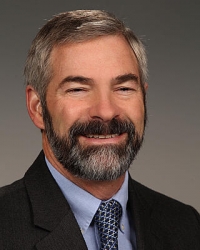
Jim De Yoreo is an Affiliate Professor of Chemistry and of Materials Science and Engineering. Research in the De Yoreo lab focuses on understanding the pathways of nanoscale and solution-processed materials synthesis, including 2D materials synthesis using materials characterization methods of spectroscopy and microscopy. In particular his lab investigates the dynamics of nucleation, growth, transformation and self-assembly of nano materials. Insights into the underlying mechanisms are obtained by using in situ microscopy and spectroscopy tools to directly probe the organization of atomic, molecular and nanoparticle species.
Daniel Gamelin
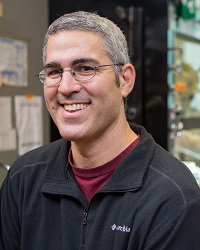
Daniel Gamelin holds the Nicole A. Boand Endowed Chair in Chemistry at the UW. His research involves the development of new inorganic materials with unusual electronic structures that give rise to desirable photophysical, photochemical, magnetic, or magneto-optical properties. Honors for his work include the Presidential Early Career Award for Scientists and Engineers (PECASE), the ACS Inorganic Lectureship Award, the Dalton Transactions Americas Lectureship Award, the ACS Inorganic Nanoscience Award, and the Debye Chair Professorship at Utrecht University. He is a Fellow of the AAAS and the RSC, a Senior Fellow of the Zukunftskolleg at the University of Konstanz, and an elected member of the Washington State Academy of Sciences.

