Skip to content
People

Serena Eley

Electrical EngineeringIRG 2Research Faculty

In the Eley Quantum Materials Group, Eley researches the role of disorder on electronic and magnetic properties of quantum materials and devices, including the vortex-defect interactions in superconductors, skyrmion-defect interactions in magnetic materials, and the effects of material microstructure on energy loss in superconducting circuits.
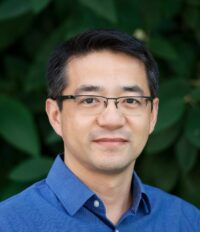
Mo Li

Electrical EngineeringPhysicsIRG 2Research Faculty

Mo Li is an Associate Professor of Electrical and Computer Engineering and Physics. Research in Li lab focuses on integrated and quantum photonic systems, optoelectronic devices and materials, optomechanics, NEMS/MEMS, and spintronics.

Scott Dunham

Electrical EngineeringAI CoreIRG 1Research Faculty

Professor Scott Dunham, EE Dept., University of Washington .The Nanotechnology Modeling Lab at the University of Washington is part of the Electrical Engineering Department in the College of Engineering. The efforts within the Lab are focused on obtaining basic understanding of nanofabrication processes and device operation, applying that knowledge to produce better models, simulators and devices. Research within the Lab includes model development for process simulation, application of a wide range of simulation and modeling tools for device design and optimization, and experimental studies of device fabrication.

Kai-Mei Fu

Electrical EngineeringPhysicsIRG 1IRG 1 Co-LeadIRG Leaders

Kai-Mei Fu​ is Professor of Physics and Electrical Engineering at University of Washington.

Fu's Quantum Defect Lab studies defects in crystals- both in bulk single crystals and nanoparticles. Their MEM-C work spans the areas of materials characterization, spin-photonics and magnetism. The group is occupied with the following questions:

* What are the fundamental properties of a known defect state? Alternatively, by measuring the properties of an unknown state, can we identify it?
* How can the quantum properties of a defect be engineered and controlled?
* What new technologies can quantum properties of defects enable?
* What new capabilities can be realized through solid-state device integration of defects?