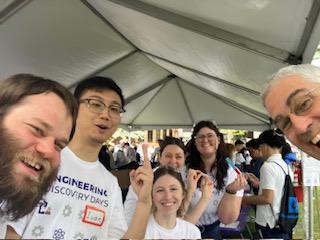
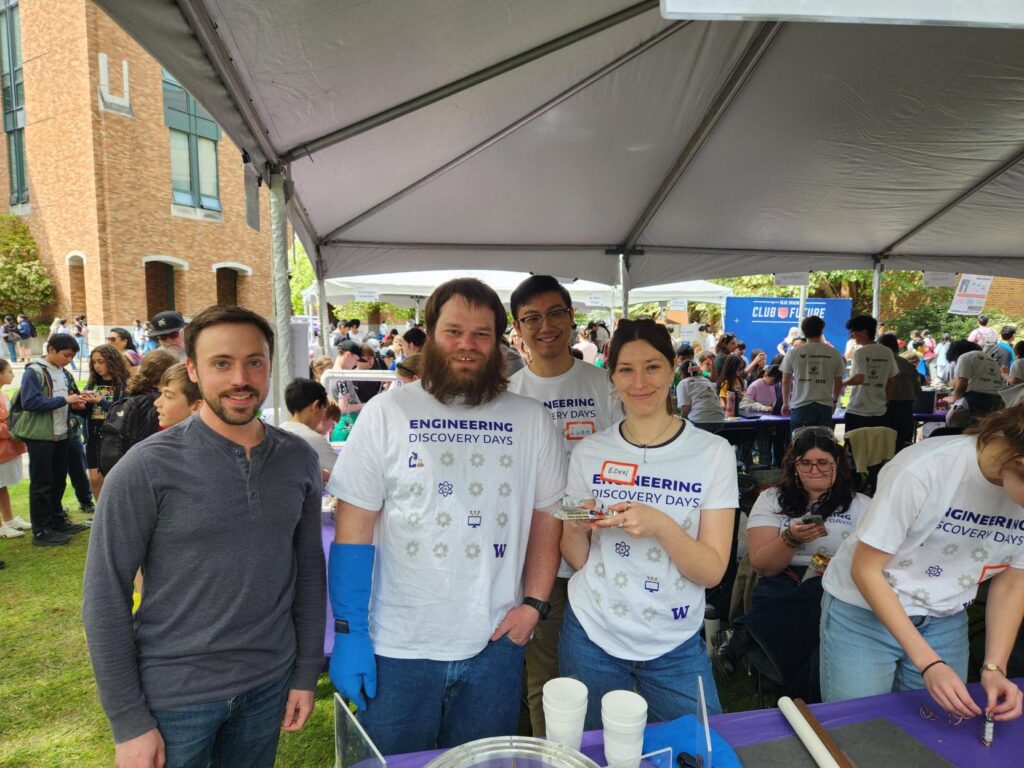
MEM-C students and faculty returned to UW Engineering Discovery Days on Friday, May 1st, 2026.


MEM-C students and faculty returned to UW Engineering Discovery Days on Friday, May 1st, 2026.
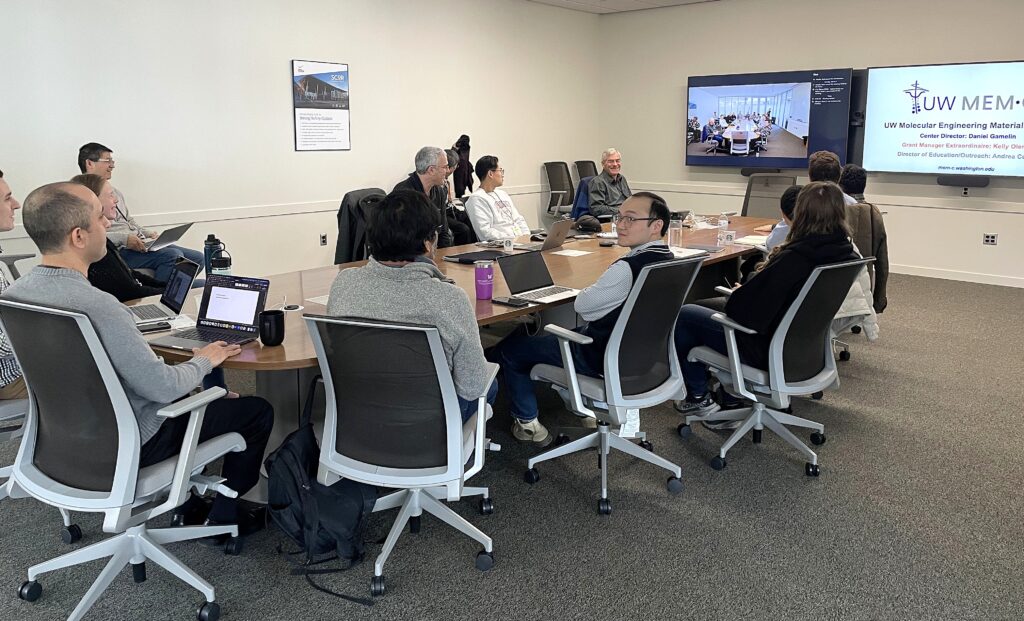
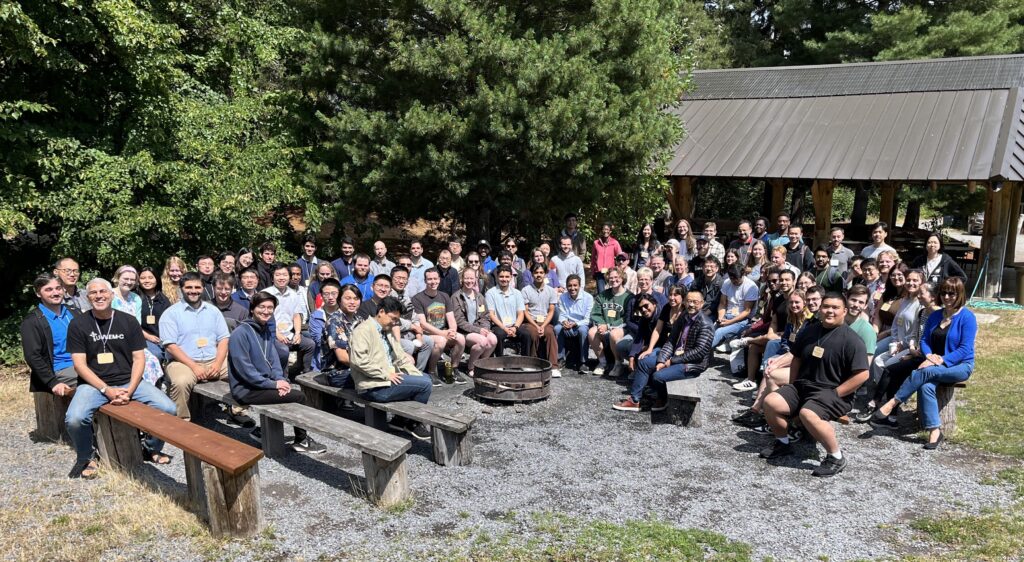
MEM-C gathered on February 3, 2026, for collaboration brainstorming, updates from Center leadership and strategic planning for the coming year.
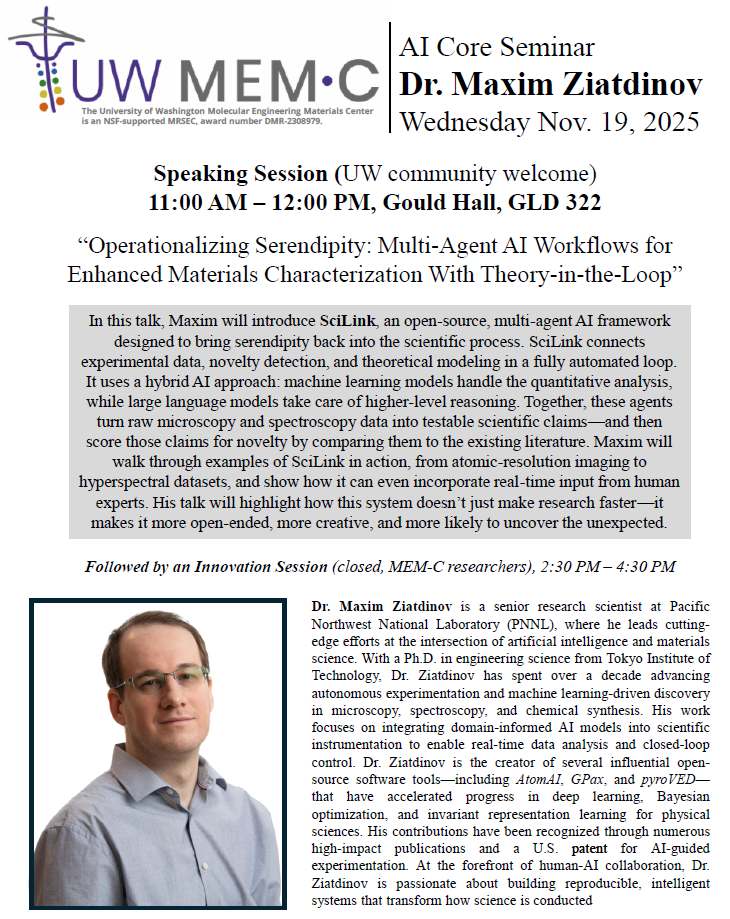
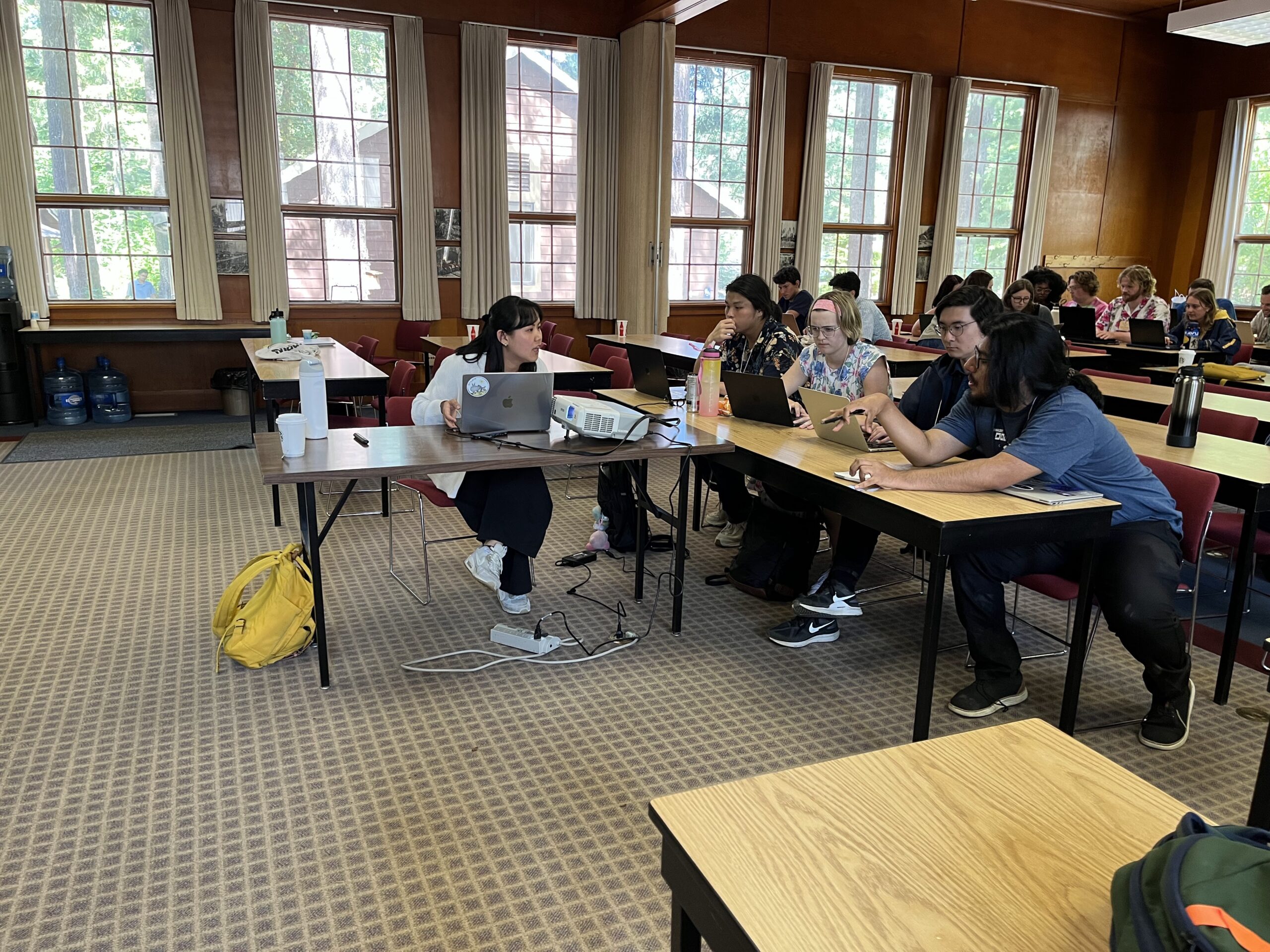
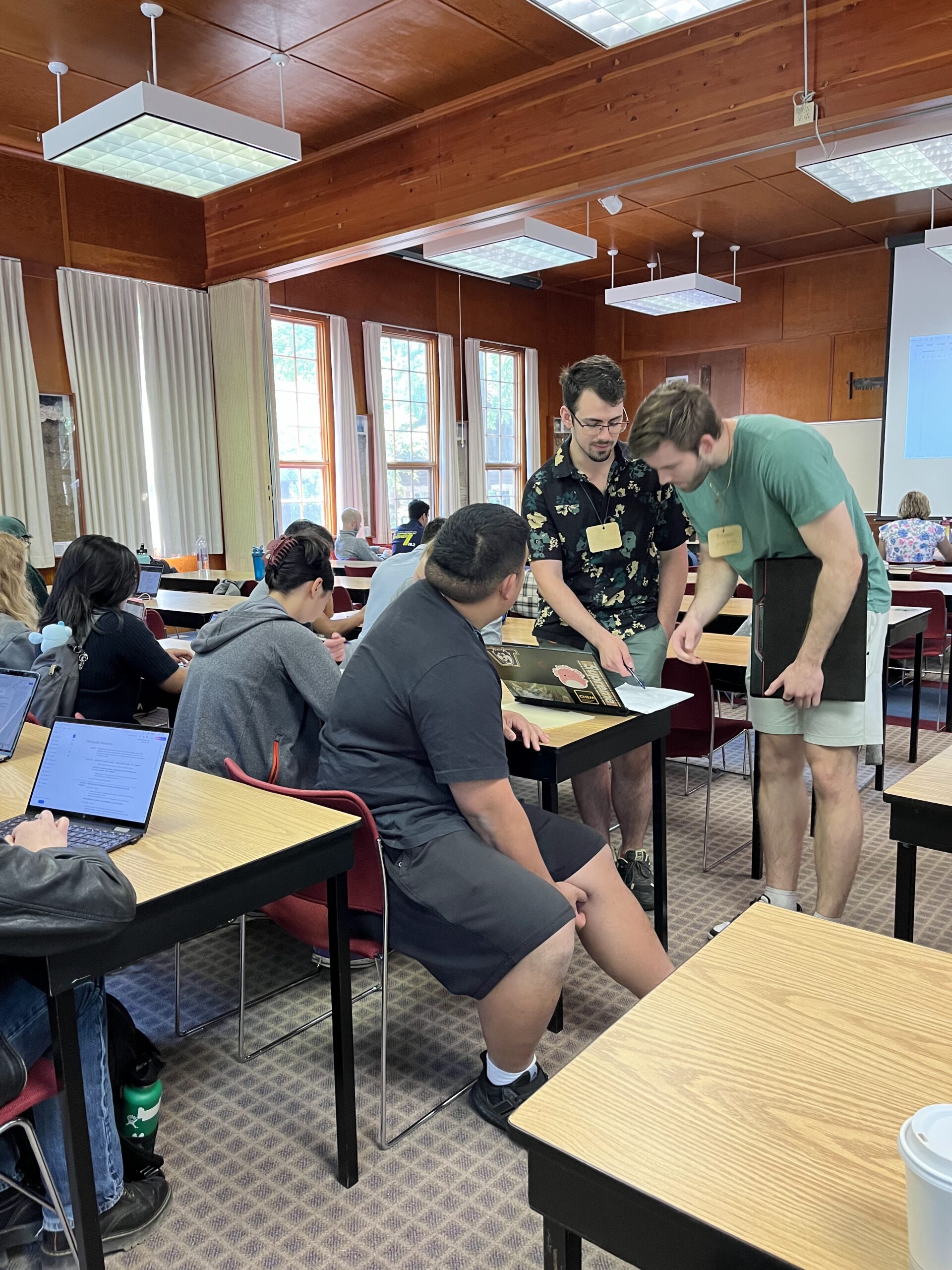
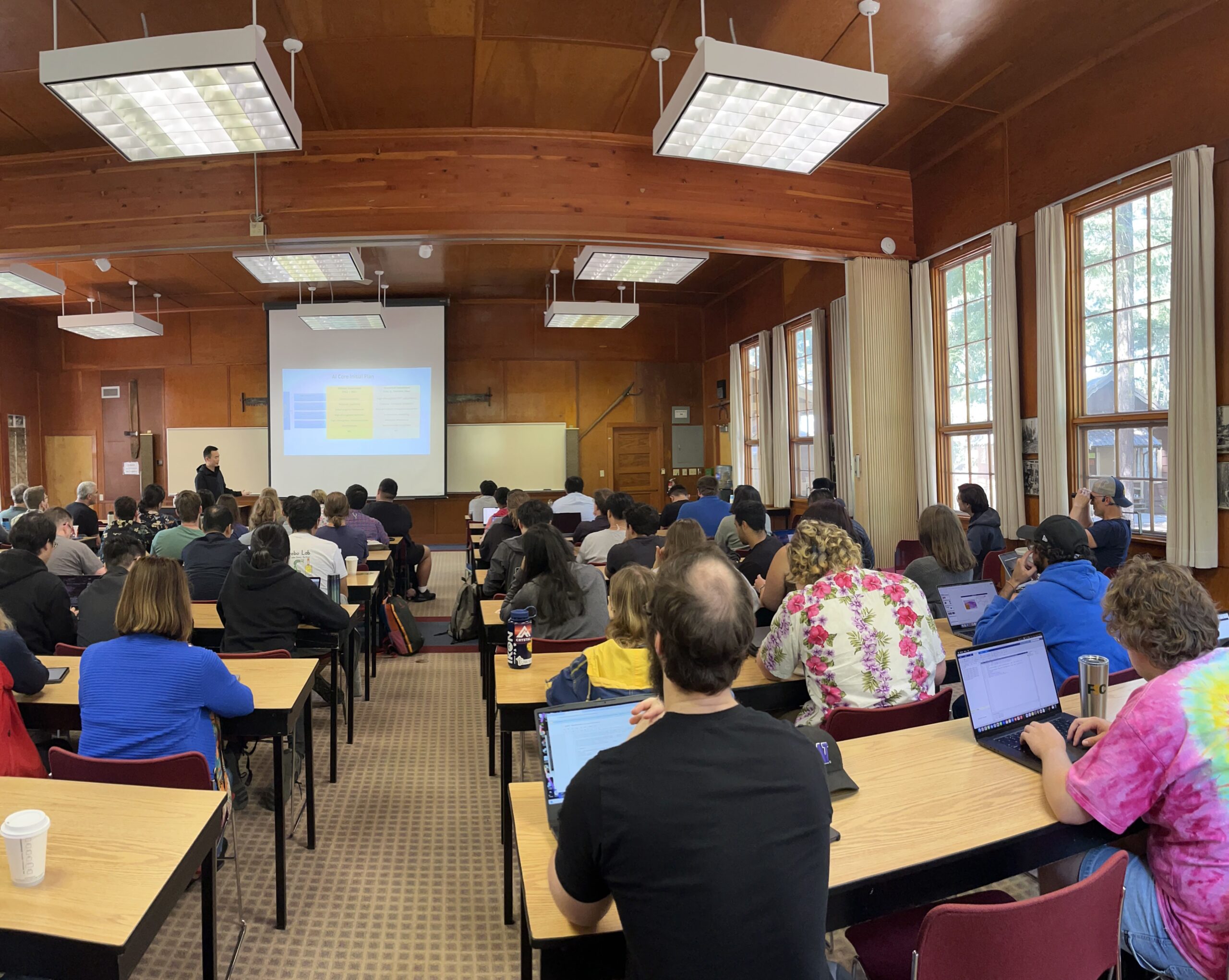
MEM-C faculty Ting Cao, Juan Carlos Idrobo, and Daniel Gamelin organized a MEM-C AI Core seminar and innovation session at UW with Dr. Maxim Ziatdinov (PNNL) on November 19, 2025. In addition to one-on-one meetings MEM-C faculty, Maxim gave a seminar highlighting PNNL research on multi-AI workflows for enhanced materials characterization. Then MEM-C hosted an afternoon innovation session featured small-group discussions between Ziatdinov and MEM-C students, including Shared Facilities superusers, on AFM (Yankowitz group), SAXS (Pozzo group), ZnO qubits (Fu group), SQUID (Chu, Cossairt groups), fluorimeter (Gamelin group), SEM (Idrobo group), theory and computing facilities (X. Li group), and microwave reactors with MOF applications (D. J. Xiao group).
UW MEM-C, UW Nanofabrication Facility, and Bruker are pleased to co-host an AFM workshop
on November 4-5, 2025. During this free two-day event, our AFM experts will showcase the
unique and powerful capabilities of the technique. Hands-on demonstrations will feature Bruker
Dimension Icon and Dimension FastScan, accessible to both UW and non-UW users through
MEM-C’s Shared Facilities and Nanofabrication Facility, respectively. If interested in providing
samples for Bruker’s experts to demonstrate during the workshop, please register
and email Dr. Thi Kieu Ngan Pham at Thi_Kieu_Ngan.Pham@bruker.com.
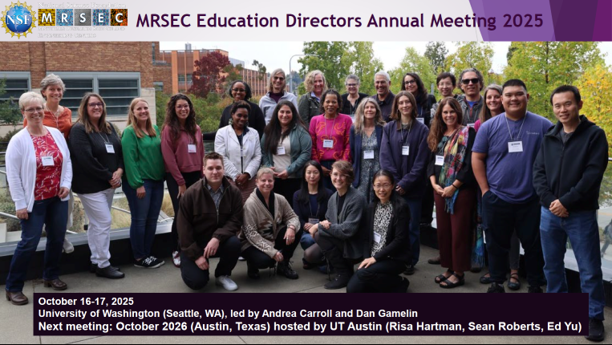
MEM-C hosted the fall meeting of the MRSEC Education Directors Network, bringing together 24 participants from 19 MRSECs, guest presenters from Science with Impact, NSF’s Center for Molecularly Optimized Networks, and UW’s Resilience Lab, along with MEM‑C graduate students and faculty. The 1.5‑day meeting supported collaboration, professional development, mentorship, and shared innovation across Centers. MEM-C Education Director led the meeting as as Network Director and Annual Meeting Chair.
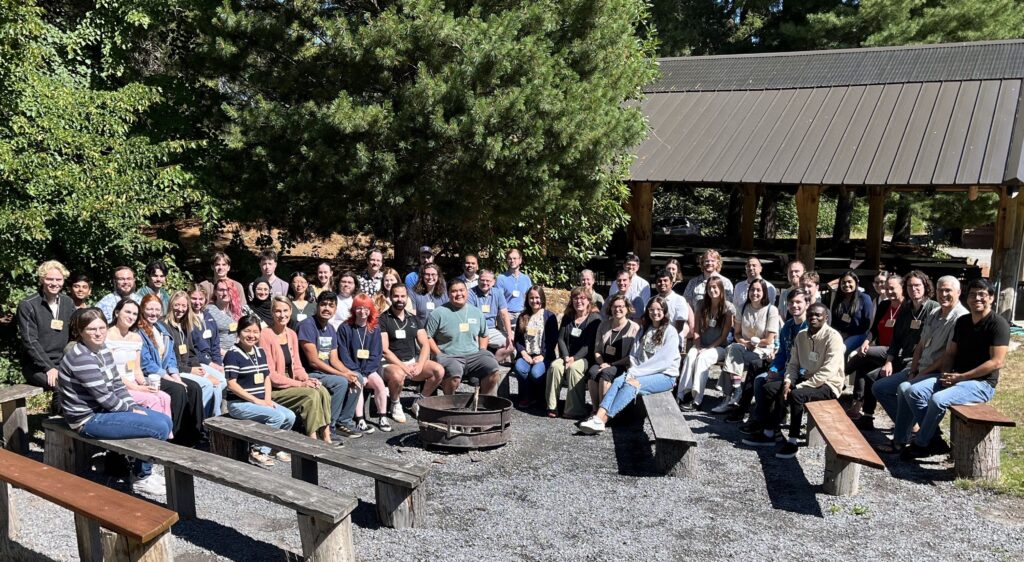
Our 2025 MEM-C summer undergraduate researchers are in the last few weeks of their 9-week program! This summer we welcomed 14 amazing students from 10 institutions across the U.S., including 8 students through the Research Experience for Undergraduates (REU) program and 6 from our Partnership for Research and Education in Materials (PREM) partner institutions at the University of Hawai’i – Mānoa and the University of Central Florida. These students are working in MEM-C labs across five departments at UW.
On top of a full summer of hands-on research in which the students have been gaining countless in-lab skills, MEM-C has also supported weekly events and activities for our summer guests. Every week the REU and PREM students meet with our MEM-C Education and Outreach Team (Education and Teaching Fellows Eden Tzanetopoulos and Emily Miura-Stempel and Education Director Andrea Carroll) for a professional development seminar and journal club. Seminar topics include “How to Read a Scientific Paper”, “Writing a Resume and Cover Letter” and “Research Integrity and Ethics with Dr. Malia Fullerton”. During the journal club, the students present a journal article relevant to their summer research and gain practical presentation skills in the process.
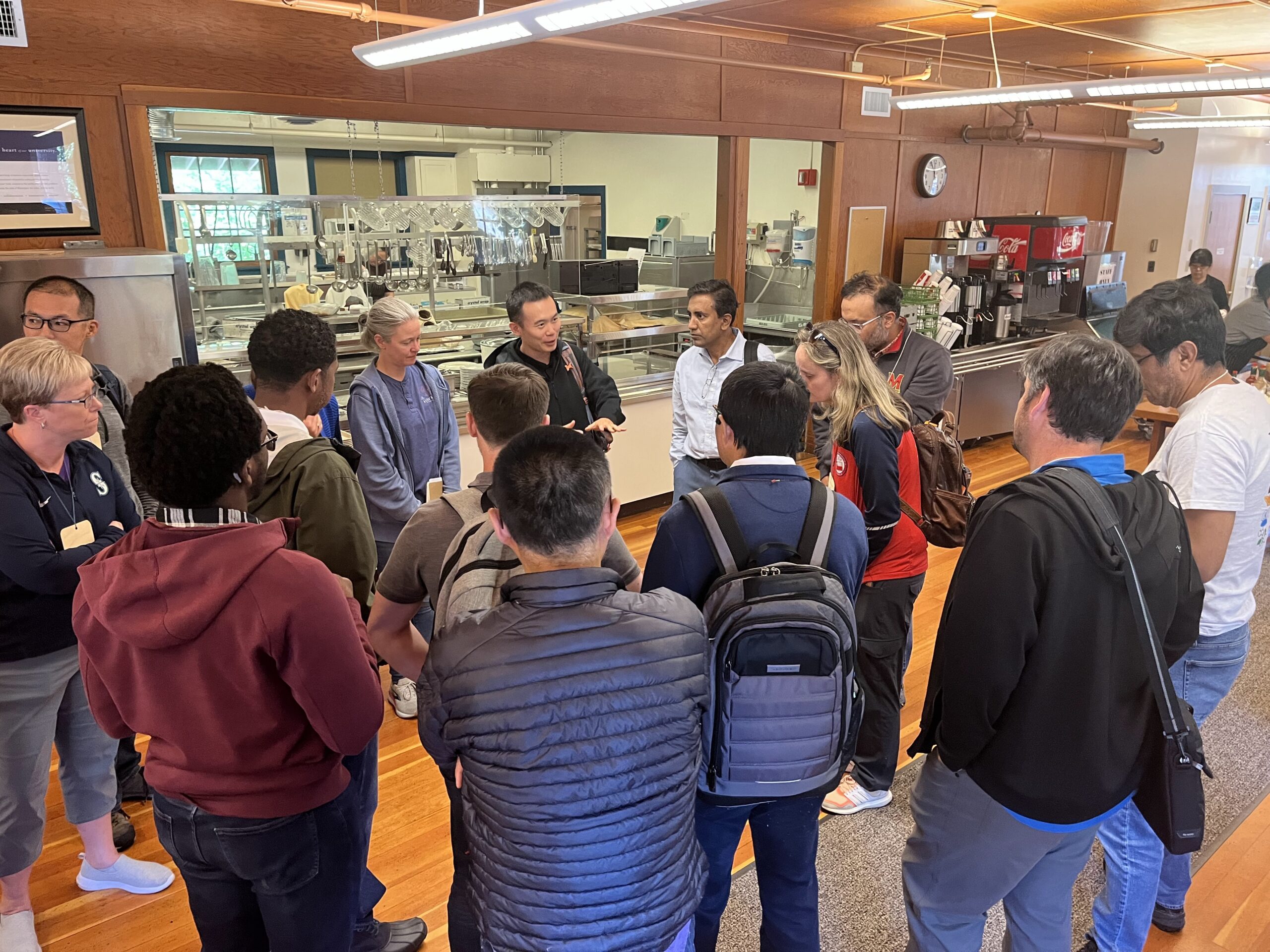
MEM-C has organized weekly lab tours for the students, spanning multiple departments across UW (Material Science & Engineering, Biology, Chemistry, Spectroscopy, MEM-C Shared Facilities, Physics, and more!). The summer cohort of students also participated in a 3-session Data Science Training offered by UW Information Technology (UW-IT) where they learned essential coding and machine learning skills. A MEM-C faculty panel was organized for the students, allowing them to ask professors across multiple departments and schools about their journey to becoming faculty and members of an interdisciplinary research center. The REU and PREM students joined the annual MEM-C All-Hands Meeting at UW Pack Forest near Mt. Rainier, where they joined sessions of technical talks, professional development workshops, and an evening poster session to hear MEM-C graduate students and postdocs present their research updates and engage in research discussions. To support a collaborative and inviting summer program, MEM-C co-hosted an afternoon of bowling and hosted a trip to a classic Seattle landmark – The Space Needle! Several summer researchers and mentors are also volunteering their time to help with outreach activities during MEM-C’s annual NanoCamp for 6-8th graders, offered through UW’s Youth and Teen Programs office.
The summer will culminate in students presenting summaries of their work at the Undergraduate Research Program Summer Poster Session. The REU and PREM students have been chipping away at a summer of compelling research that will be sure to wow all attendees at this event. We are so proud of all the progress our students have made and will continue to make throughout the summer.
We would like to especially thank all the MEM-C graduate student mentors and faculty hosts who have made this program possible through their mentorship and support. We would also like to thank the labs and research groups who have hosted tours and Kelly Olenyik for all her help organizing this program.


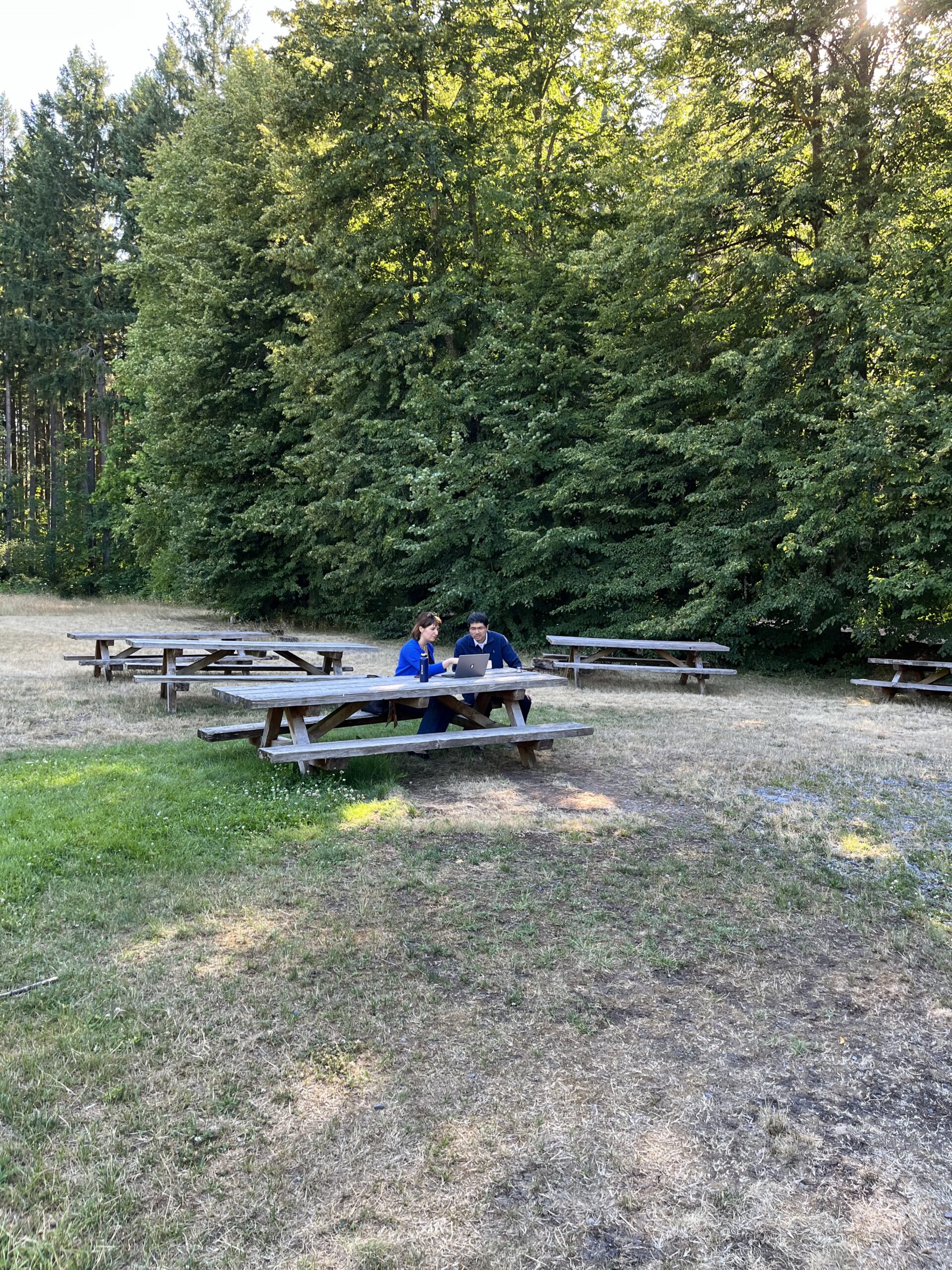
This year’s cohort of students in MEM-C’s Academic Year Research Accelerator (AYRA) Research Experience for Undergraduates (REU) program, wrapped up an impressive school year of hands-on research, diving deep into cutting-edge materials science topics. From nanoparticle synthesis and conductivity studies to semiconductor nanocrystals and graphene-based heterostructures, these talented undergraduates explored a wide range of research areas that are shaping the future of materials engineering.
Working alongside dedicated graduate student mentors and hosted in the labs of Professors David Cobden, Daniel Gamelin, Mo Li, Lilo Pozzo, Matthew Yankowitz, and Alexandra Velian, the students not only learned the ropes of academic research but also contributed meaningfully to ongoing projects. Their work culminated in a lively presentation session showcasing projects such as enhancing high-throughput synthesis platforms, investigating metalated cluster behavior, and integrating biomolecules into 2D materials.
A huge thank you goes out to the professors for generously welcoming the students into their labs and to the graduate student mentors for their guidance, patience, and encouragement throughout the year. MEM-C is proud to support these students and looks forward to seeing where their research journeys take them next!
| Name | Mentor | Faculty |
| Aleksandra Grey | Kiran Vaddi | Lilo Pozzo |
| Jake Klompus | Zach Wylie | Lilo Pozzo |
| Alice Leppert | Eden Tzanetopoulos | Daniel Gamelin |
| Debora Mugisha | Toby Chu & Ellis Thompson | Matt Yankowitz |
| Viru Sharma | Gianluca Delgado | David Cobden |
| Grace Pardini | Adina Ripin | Mo Li |
| Simon Wong | Robert Love | Alexandra Velian |


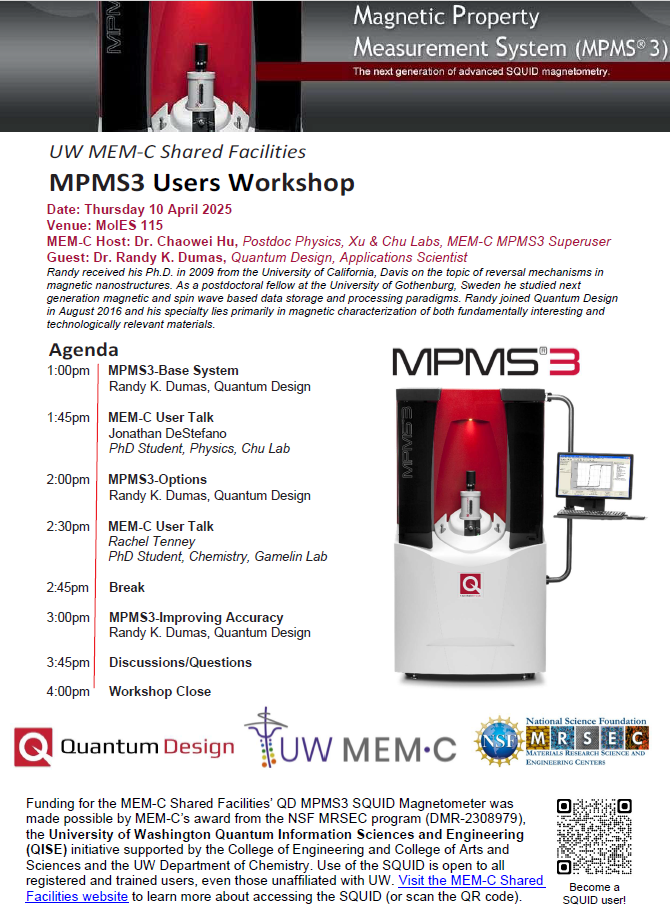
MEM-C’s Shared Facilities (MSF) has a new addition! The Quantum Design MPMS3 was installed and commissioned in February 2025 and is ready for use by the scientific community at-large. As a shared facility, the MPMS3 is available for all registered and trained users, even those unaffiliated with MEM-C and even those external to UW. Check out the access page on the MEM-C website for more information or contact the SQUID superusers for details.
Funding for the MEM-C SQUID was made possible by MEM-C’s award from the NSF MRSEC program (DMR-2308979), the University of Washington Quantum Information Sciences and Engineering (QISE) initiative supported by the College of Engineering and College of Arts and Sciences and the UW Department of Chemistry. The MEM-C SQUID is the only MPMS3 instrument available in a shared facility space in the PNW (the nearest one we know of is at UCSB’s MRSEC shared facilities MRL).
To give the SQUID a proper launch, MEM-C is hosting a seminar on April 10th, 2025, with Dr. Randy K. Dumas, Quantum Design, Applications Scientist. The seminar will be in MolES 115 from 1PM to 4PM. The seminar is open for anyone interested to attend! The event will be hosted by Dr. Chaowei Hu, Physics Postdoctoral Scholar in the Xu and Chu groups who is the MEM-C superuser for the MPMS3. The seminar will feature application talks by Randy and MEM-C graduate students will also give brief descriptions of their research plans that rely on the SQUID’s capabilities.
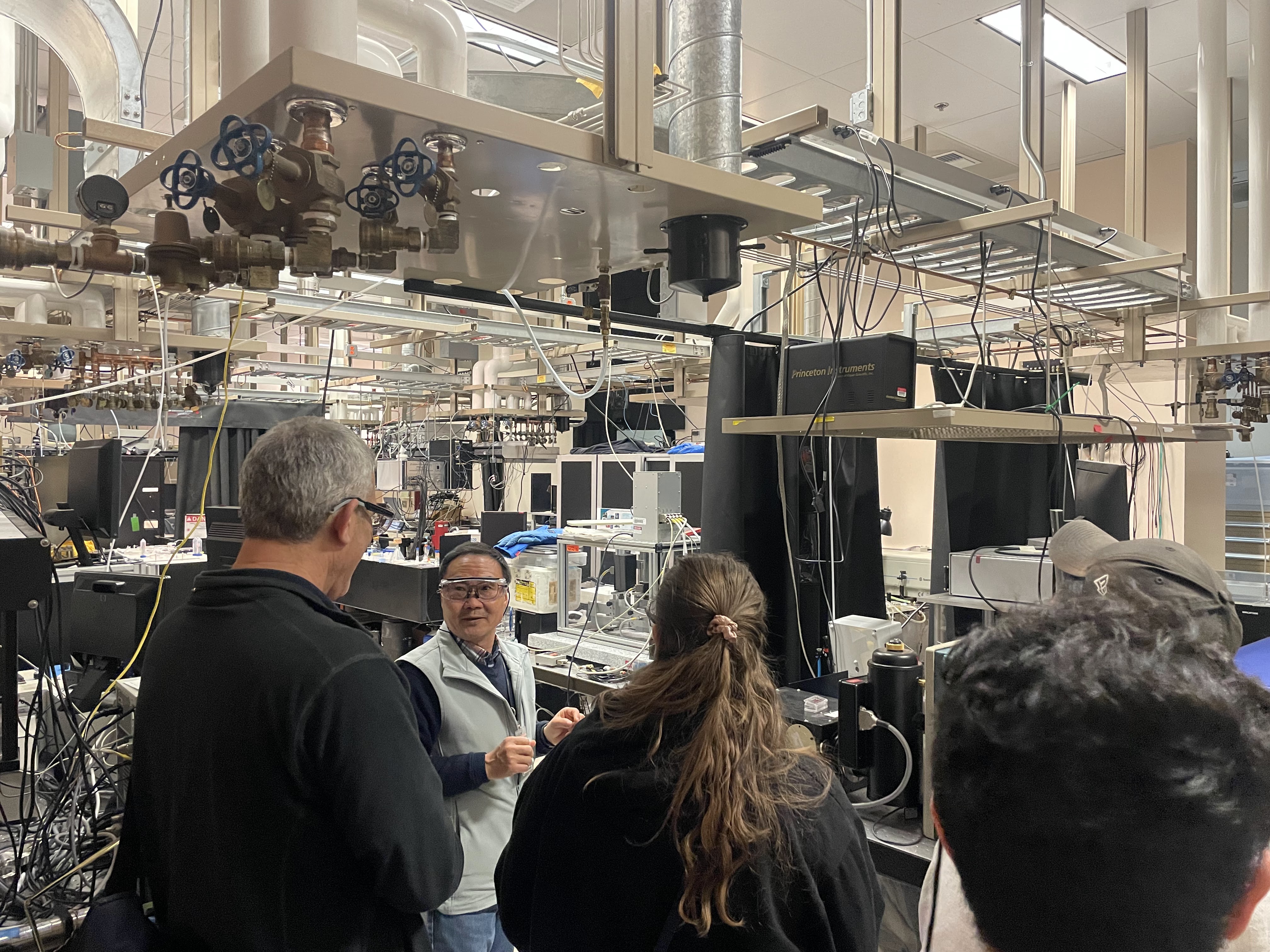
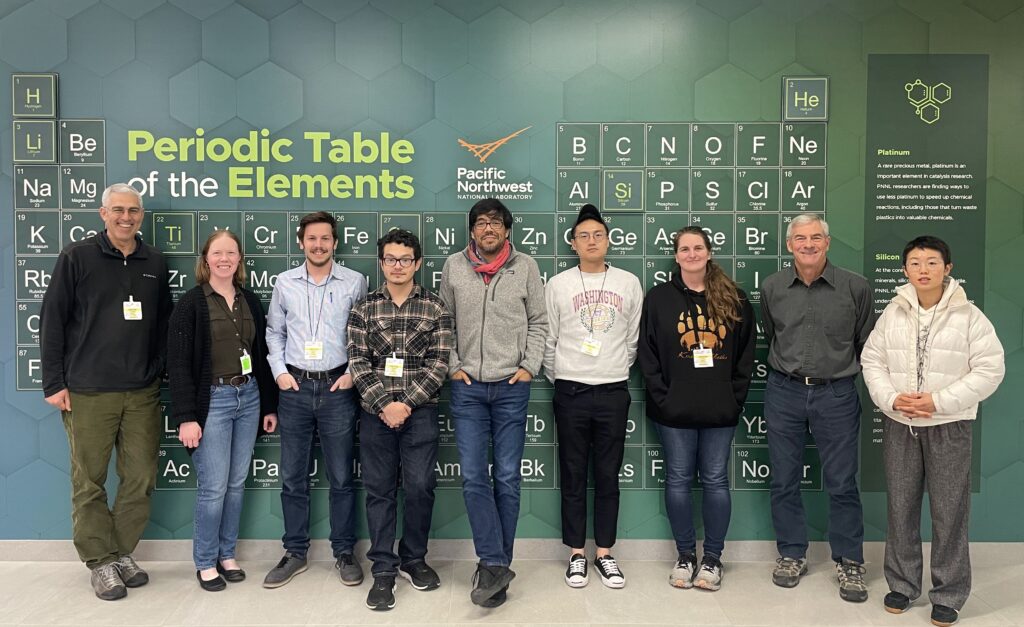
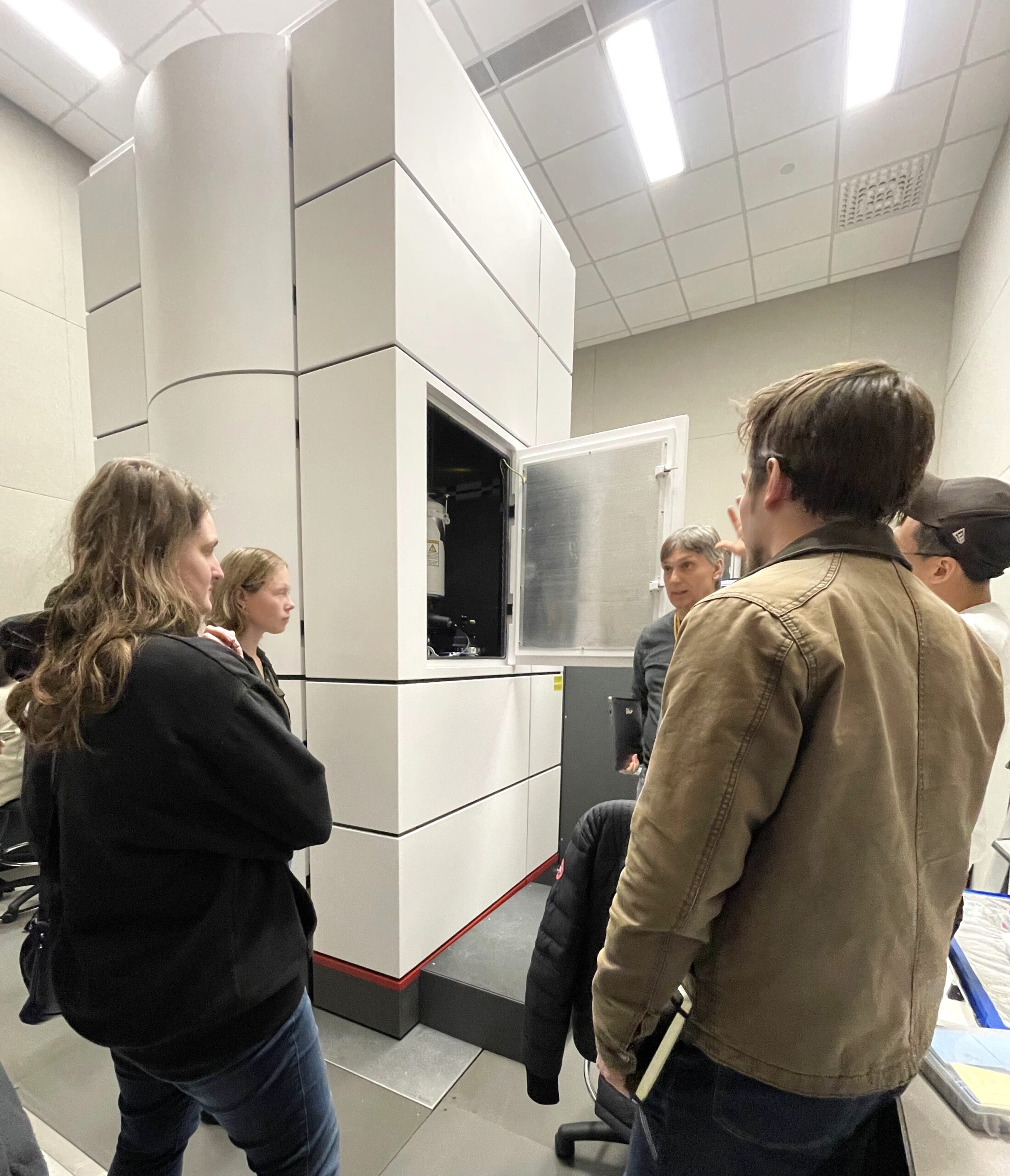
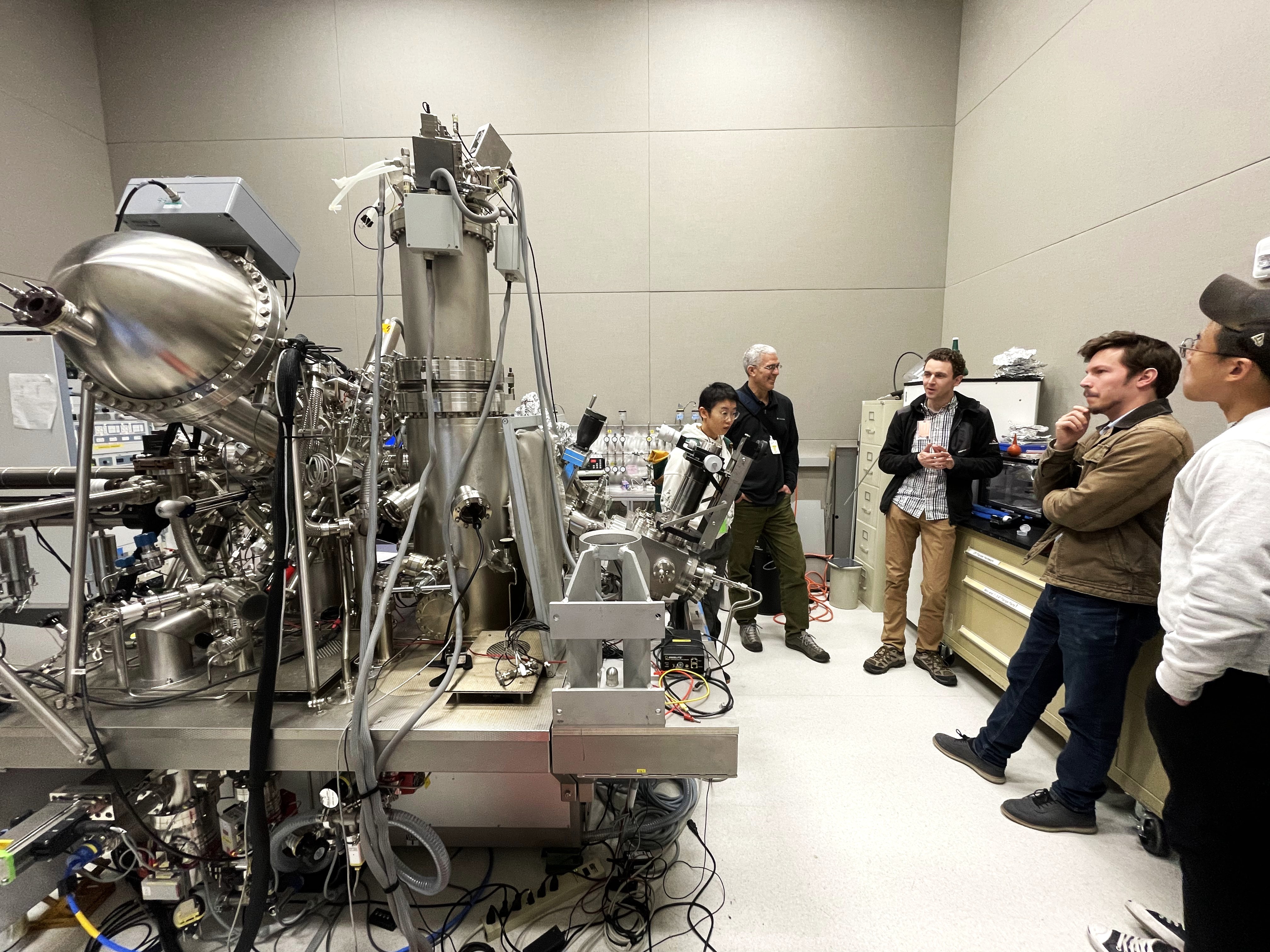
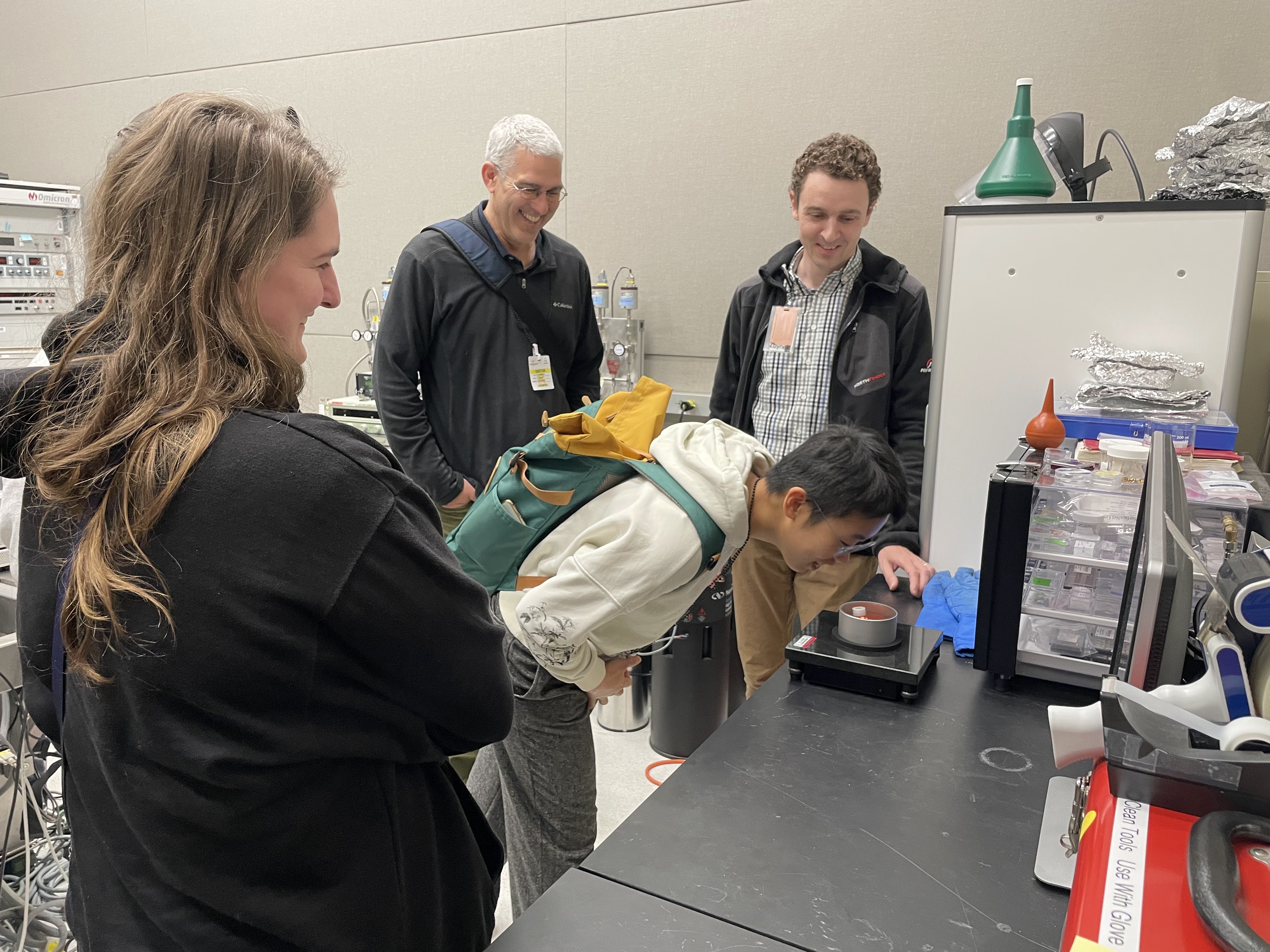
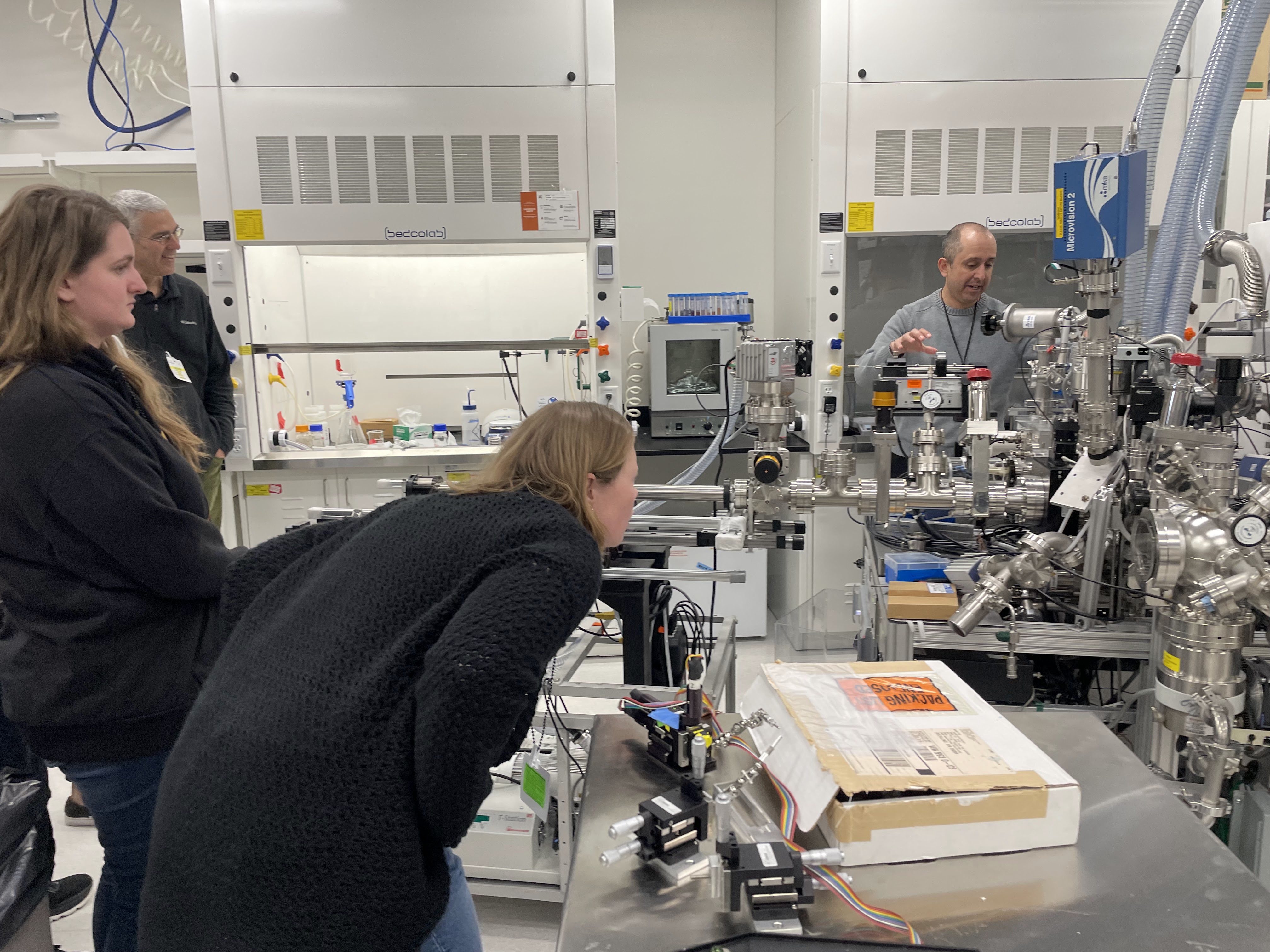
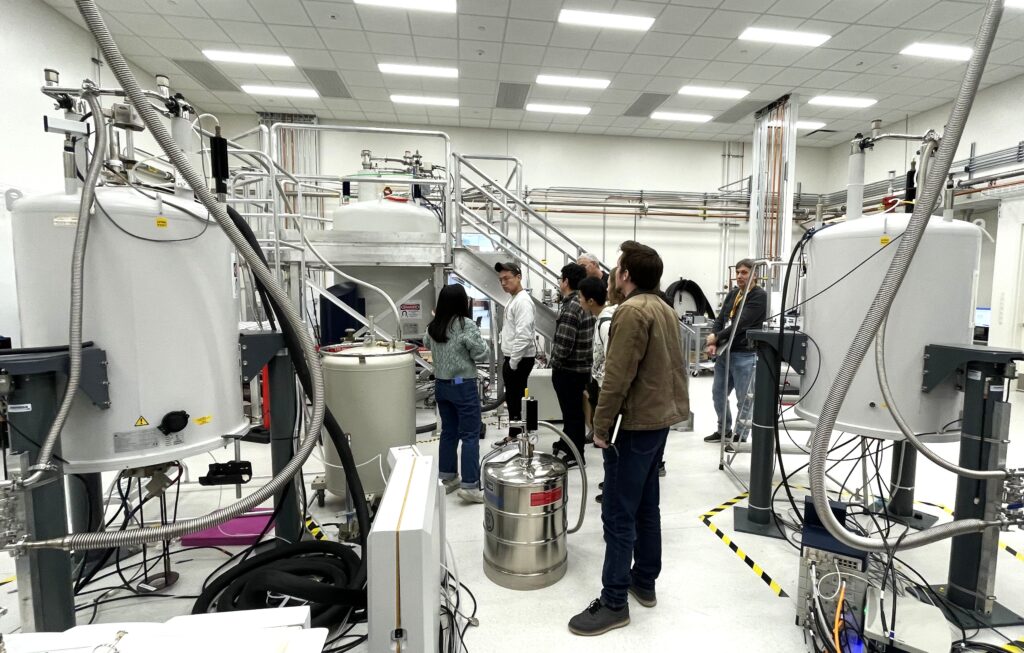
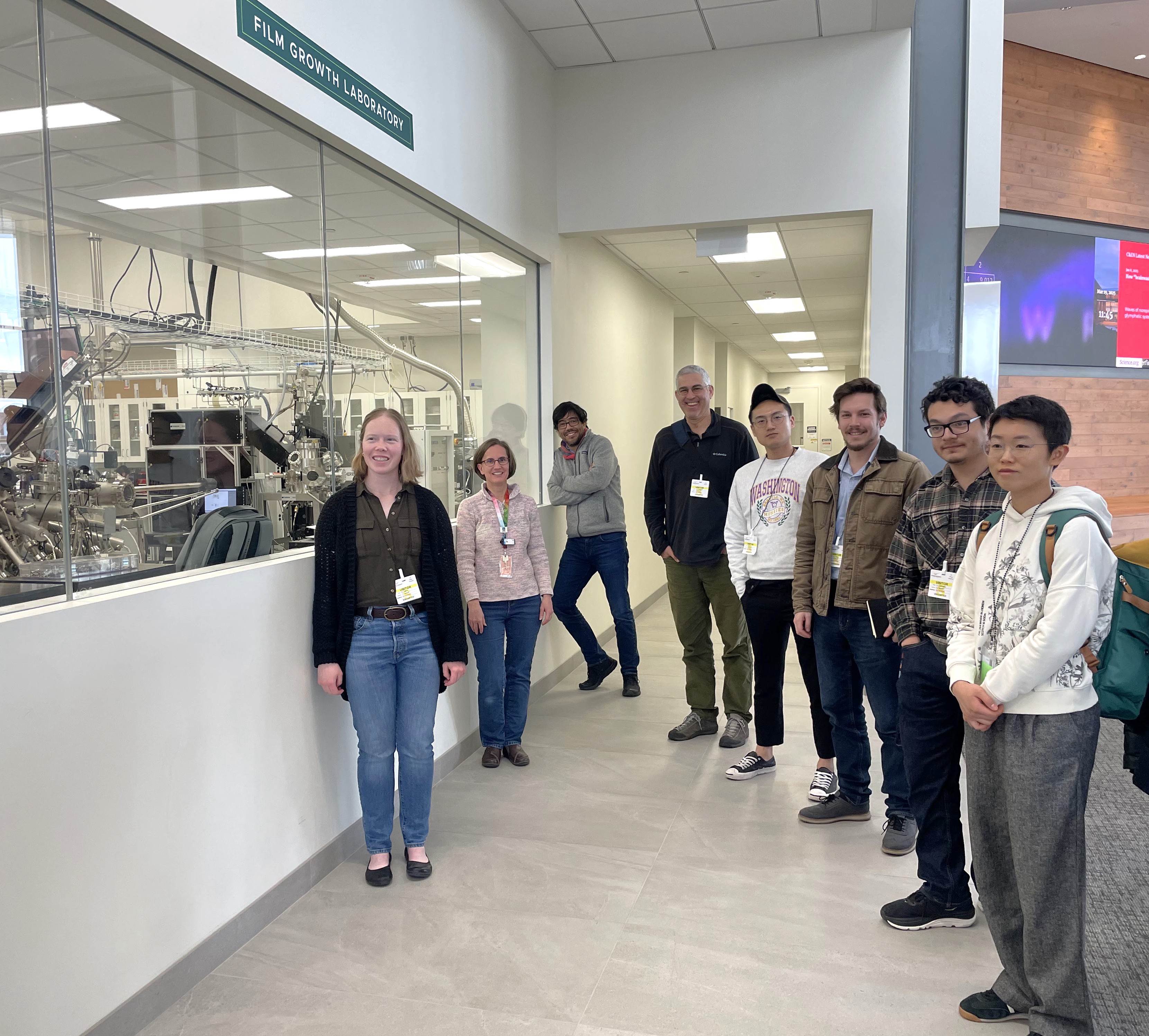
A delegation of MEM-C researchers traveled to PNNL for tours and facility tours last last Wednesday. The UW visiting group consisted of five PhD students from the De Yoreo, Gamelin, Idrobo, Mouradian, Rorrer, Xu, and Fu groups), one postdoc (Rorrer group) and De Yoreo, Gamelin, and Idrobo from the UW faculty side.
The visit featured a series of short talks by PNNL staff scientists, including Le Wang (thin films), Grant Johnson (chemical separations), Zbynek Novotny (scanning tunneling microscopy), Maxim Ziatdinov (AI/ML), Chongmin Wang (batteries and in-situ TEM), and Micah Prange (density functional theory). In addition, Scott Smith provided an overview of career opportunities at a national laboratory. MEM-C visitors also toured the laboratories in PNNL’s new Energy Sciences Center (ESC), which houses state-of-the-art instrumentation such as in-situ electron microscopes, an atom probe, molecular beam epitaxy and pulsed laser deposition chambers, a low-temperature scanning tunneling microscope, and a magnetic resonance spectrometer.
During the visit, Gamelin and Idrobo met with Novotny to discuss the feasibility of detecting Yb and measuring its spin state in a few-layer CrI3 encapsulated with BN/graphene. Novotny recommended reaching out to Dr. Percy Zahl at the Center for Functional Materials (CFM) at Brookhaven National Laboratory (BNL) due to the specialized requirements of such measurements. MEM-C also plans to invite Dr. Maxim Ziatdinov to the UW campus. An expert in AI/ML methods and their implementation in imaging analysis, electron microscopy workflows, and materials synthesis, Dr. Ziatdinov would lead hands-on workshops and contribute to strengthening the capabilities of the AI Core.